
Unencumbered by tradition, courageous Quebec winemakers are taking cool climate winemaking to new heights with an exciting mix of hybrids, vinifera and blended fruit styles.
I’m just back from an incredible four-day road trip to Quebec’s Eastern Townships to visit friends and search for sparkling wine.
Why sparkling you ask? Because La Belle Province is a gloriously ‘nordique’, cool climate region which makes it perfect for high quality fizz, exceptional effervescence and stunning sparklers of every style. What’s best, according to those with savoir faire – aka @vinsduquebec – you are spoiled for choice in Quebec with more than half the vineyards making some type of bubbly!
Like Traditional Method wines? – the same method used to make Champagne? Mais oui!!
Stylish, spritzy, single fermentation Pet Nats (short for pétillant naturel)? Bien sur!
Gentle sparkling Frizzantes? Beaucoup!
Low alcohol, fun and fizzy Piquettes? Bon choix!
Yes, bubble-lovers, it’s not a stretch to say Quebec winemakers are brilliant at bulles (bubbles), which makes infinite sense given they have all of that natural, racy acidity on their side.
BUT …. if you visit Quebec only for sparklers (mea culpa), you are missing half of the story.
Because HOLY MOLY, the wine scene in Quebec is exploding with excitement as local wine lovers embrace a full spectrum of deliciously drinkable sparkling, vinifera and hybrid wines. With over 160 producers and a growing roster of super crisp, super imaginative, natural wines from all types of cépages (grapes), Quebec is increasingly exuding that oh-so elusive “sense of place”
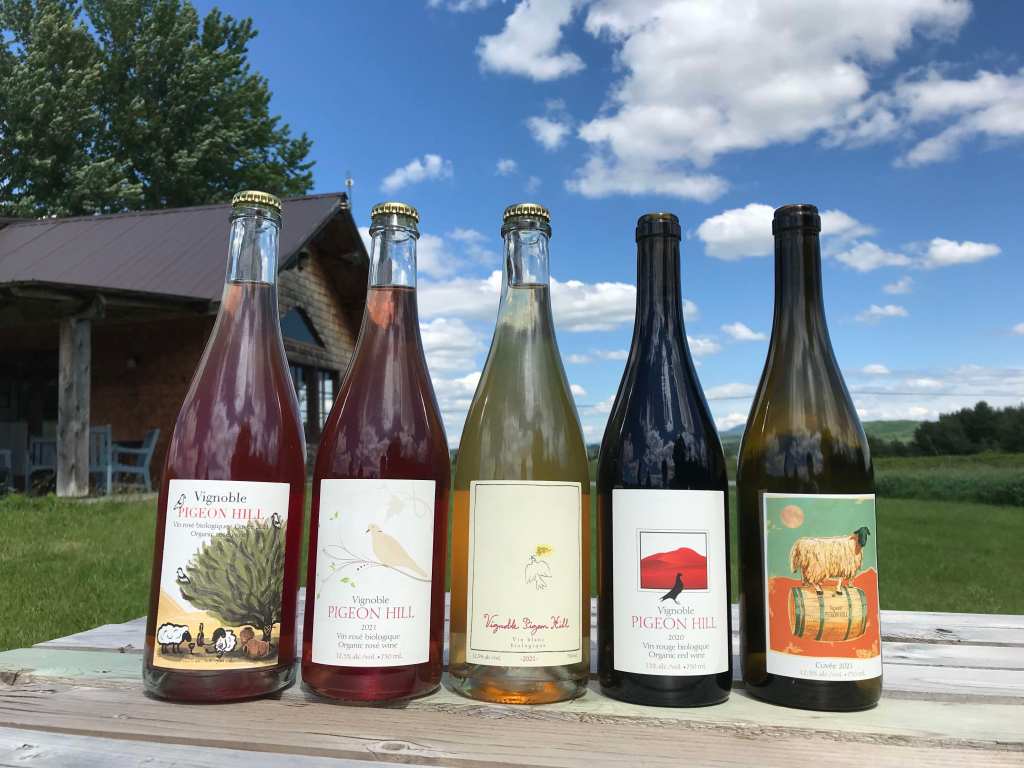
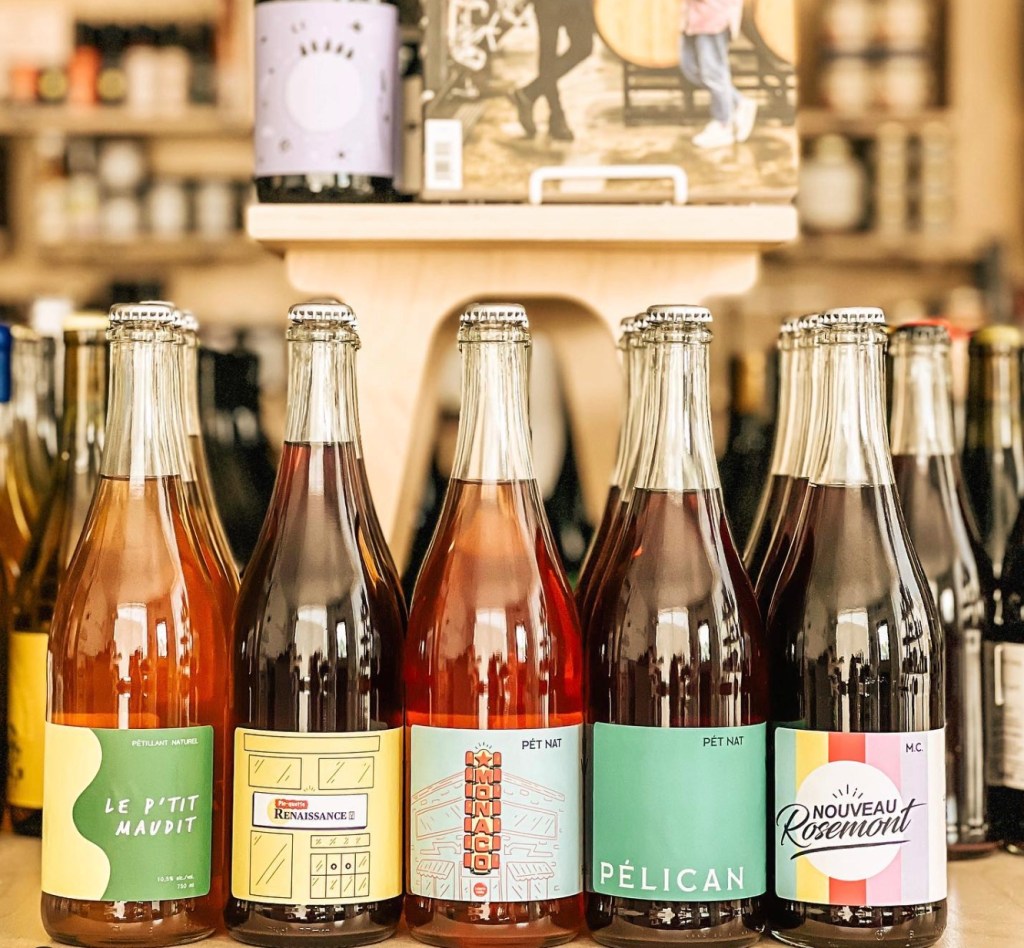
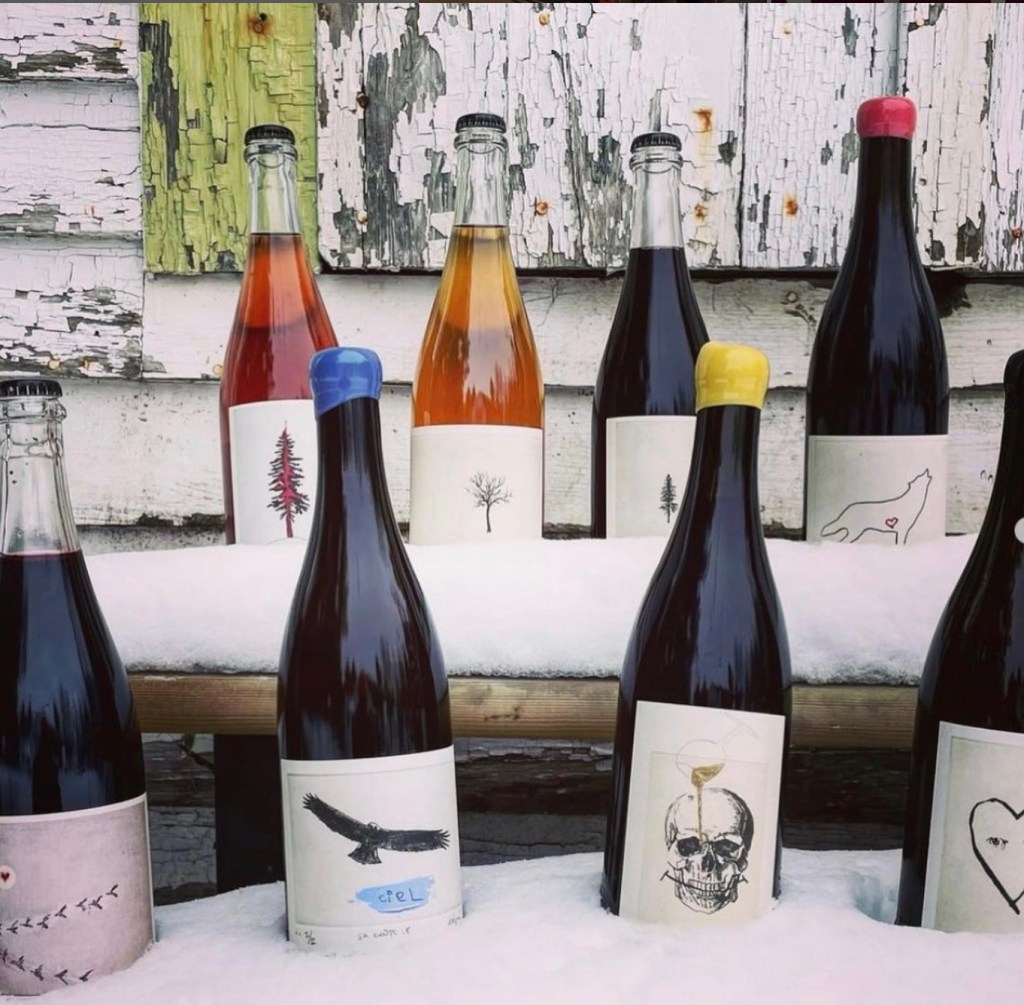
Quebec: the coolest, most exciting winemaking region in North America – bar none!
For the longest time, northern climates were seen as an obstacle to quality winemaking.
But according to Laval’s Pascale Rémond – co-owner with her sister Marie-Claud of the celebrated Quebec wine & culinary boutique Les Minettes – people who believe that simply haven’t been paying attention!
What makes Quebec’s sparkling and still wines so delicious and exciting, she argues, is the vast collection of cold-hardy hybrids, vinifera and ‘blended’ wines that are a response to Quebec’s extreme climate.
“There are no rules for winemaking here in Quebec,” Pascale explains. “Everything comes down to the vintage and each year is so different. 2021 was a spectacular vintage both in quality and quantity. 2022 brought challenges, including cooler temperatures and twice as much rain. In the end, winemakers created some beautiful wines. But here in Quebec, we are at the mercy of a harsh climate and it’s never easy.”
Pascale says it’s precisely that vintage variation, those climate extremes, that allow Quebec winemakers to be so adventurous. “They are always balancing acidity, playing with grapes, sometimes blending vinifera with hybrids, hybrids with ciders, hybrids with honey, wine with fruit and herbs – all to create wines that are balanced, fresh and delicious.”
Winemaking in Quebec, she explains, is like one big playground. “And our customers here love to play – they get to celebrate new varieties, different cépage blends and discover new approaches to winemaking. It’s a very fun, experimental and dynamic market and Quebecer’s enthusiasm for Quebec wines is only increasing!”
While the majority of Quebec winemaking is happening in the Eastern Townships (see wine map), there is nothing uniform about the region’s terroir. The vast geography, geology and climate of the Townships results in a huge range of soil characteristics and microclimates, with experimental plantings and trial and error, de rigeur.
Lake-influence vineyards and those closer to the Vermont border are having great success producing wines made with classic, European vitis vinifera grapes. Indeed, some of the province’s trailblazing producers – Pinard et Filles, Domaine de L’espiègle, Maison Agricole Joy Hill – are producing vinifera wines to great acclaim with cool climate varieties like chardonnay, pinot noir, pinot gris, chenin blanc, gewurztraminer and gamay.
But the Quebec ‘playground’ Pascale refers to, and the truly exciting regional identity that’s emerging – by necessity – increasingly comes from wines made from cold climate North American hybrid varieties (with French and German crosses thrown in). These hybrids are bred to be thick-skinned and winter hardy – with the hardiest withstanding temperatures up to -35C (-31F), making Quebec viticulture the ultimate testing ground.
What’s best, with (most) hybrids, producers don’t have to bury or blanket vines in geo-textiles, hay or other insulated coverings, an expensive but non-negotiable process required to protect thinner-skinned vinifera grapes.
So, challenging? Yes. But an obstacle to winemaking? Definitely not!


Perhaps it’s time to expand the definition of “fine wine”
Supporting local #madeinqc food and wine is a pillar of Québécois culture.
Read the Quebec wine comments on the SAQ site (the provincial retail monopoly) or on vigneron Instagram pages (WARNING: rabbit hole), and it’s clear this climatic, high-wire act and constant experimentation is resulting in hero worship from restaurants, cavistes and consumers across Quebec.
Could it be winemakers are joining the ranks of the original, tried and true beverage celebs in the region – the microbrewers and cideries? (lol)
Québécois diners are clearly proud of their producers and only too happy to try and buy home-grown, 100% Québécois wines. In many cases, the scarcity of some of the most sought-after wines, is driving serious hype, sending locals in droves to neighbouring bars and restaurants in search of these iconic brands. Indeed, many of the best QC restaurants now include significant listings of #vignoblesquebecois on their menus, an important endorsement from this acclaimed gastronomic community. (Keep reading for a list of natural wine loving restaurants and bars supporting Quebec wines.)
Do these fun, contemporary wines – specifically wines made with hybrid grapes – fit the traditional definition of ‘food wine’ or more importantly, ‘fine wine’?
“Ah oui! Definitely,” Pascale exclaims.
The daughters of Patrick Rémond, one of Quebec’s most celebrated chefs and the founder of Quebec’s original gastronomy magazine Flaveurs, the Les Minettes sisters grew up intimately connected to the food and wine scene in Quebec. Their épicerie in the heritage district of Sainte-Rose in Laval features 100% local, natural and sustainably produced products from across the province.
“We are so excited about the food pairing options with these new hybrid wines and really all the Quebec wine styles we represent,” says Pascale. “Montreal is one of Canada’s most multi-cultural cities and these wines pair beautifully with so many delicious ethnic cuisines. And fresh, higher acid wines are perfect for Quebec gastronomy because they cleanse the palate.”
According to the Quebec Wine Council (Conseil des Vins du Quebec), some 80+ grape varieties are currently grown in Quebec vineyards – most of them hybrids. Hybrid varieties and crosses like Frontenac (blanc, gris, noir), Marquette, Petite Perle, La Crescent, Saint Pépin, Marechal Foch, Seyval and Vidal thrive here. They also fully ripen, are more disease resistant and most are low intervention in the fields.
It’s also not unusual to find names like Geisenheim, Cayuga, Aravelle, St-Croix, Montreal-Blue, Léon Millot, Lucie Khulman, Radisson, Sabrevois and more (!) listed on the side of a bottle! For winemakers, these grapes add – in varying degrees – fruit and floral aromatics, fruit forward complexity, tannin and a barrel full of intriguing blending options. All this plus lower ABV wines, an important and growing trend amongst health-conscious consumers.
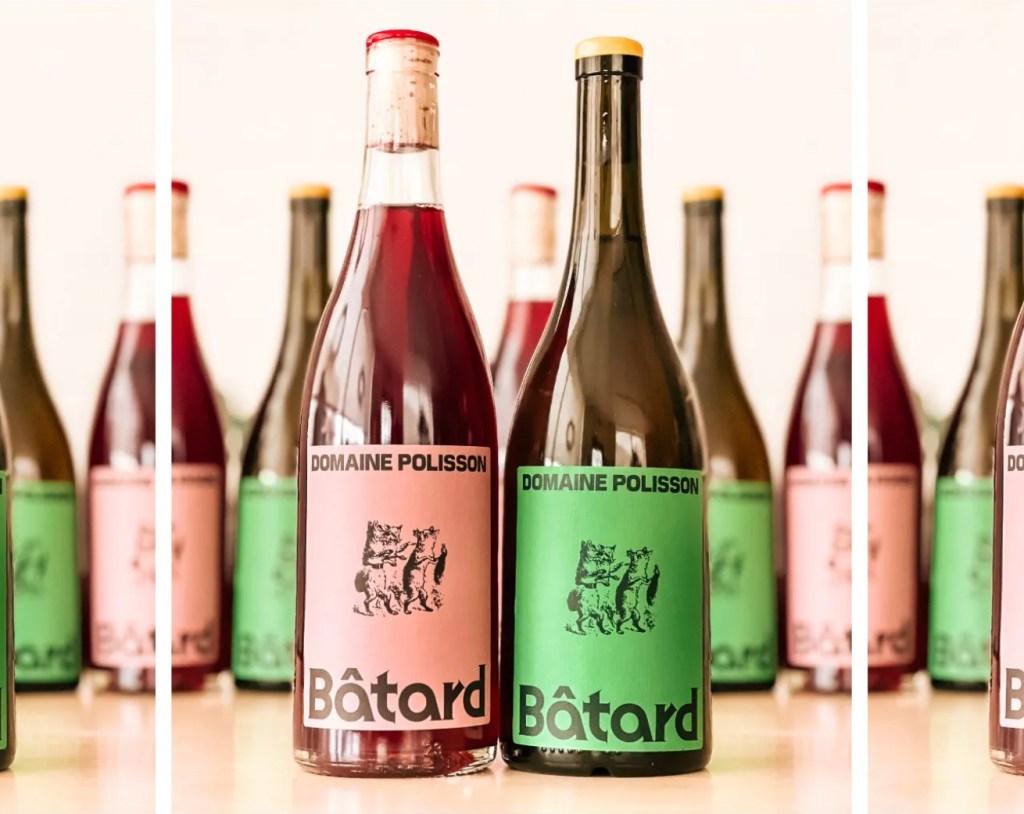
Can you communicate terroir in a hybrid?
Domaine Polisson’s Hugo Grenon in the Oka region of the Laurentians is a geologist and winemaker who is convinced that with the right winemaking technique, he can highlight the unique qualities of the terroir and the grapes.
Grenon says he is still R&D’ing his way through different planting scenarios – same grapes, different terroir – as he learns his way around lesser-known hybrids. “Unlike their noble (vinifera) cousins, these grape varieties are not grown in other wine regions, and it is necessary to study and understand them in order to make wine properly,” he told Caribou magazine.
Hybrids, he says, whether Léon Millot, Marquette, St-Pépin or Radisson, require less care in the field, but are more difficult in the cellar: “They are racing chariots that must be contained!” Grenon direct presses his Marquette to avoid contact with the thick, winter hardy skins and like many winemakers, uses semi carbonic maceration to tame the acids and optimize the fruit and aromatic expression. Hybrids are fermented and aged separately so – as with his Bordeaux counterparts – he can optimize blends.
Interestingly (at least to me :), when these grapes were developed by intrepid breeders and universities like Minnesota, Cornell, Wisconsin, UC Davis, the vision was to offer flexibility to vignerons and expand viticulture into extreme northern climates. In the last ten years, however, the grape breeding focus is on mitigating the impact of climate change. With increased temperatures (higher alcohol), shorter growing seasons, erratic weather patterns, increased disease pressure, early/spring frost – all hallmarks of climate change – many of these grapes represent the future of global winemaking (see the inclusion of new climate hardy varieties in Bordeaux and Champagne appellations).
Thankfully, in the skilled and brave hands of Quebec winemakers – these new varieties and imaginative blendings are showing the deliciously quaffable potential originally envisioned for hybrid grapes. I’m guessing a lot of grape breeders are lovin’ the extreme terroir of #vinsduquebec right about now!
(Fun Fact: In 2021, Elmer Swenson’s ES 2-1-9 grape variety, now known as Sabrevois, was named after the village near the Richelieu River in southern Quebec where Gilles Benoit of Vignoble des Pins – now Le Clos des Cigales – first made high quality wine from the variety.)


Quebec Wine Culture: Collaborations and co-fermentations abound
Although not the headline news it probably should be – it’s fair to say some of the most exciting winemaking is happening not just in Quebec, but in the northeast part of the continent.
Quebec’s forward-thinking community of winemakers are the latest region to celebrate their orchard and agricultural roots while taming northern acidity. In Vermont, Deirdre Heekin and Caleb Barber of La Garagista, the Piana family’s Fable Farm Fermentory, Wild Arc Farm’s Todd Cavallo (New York) have been experimenting with mixed fruit blends, hybrid (still and sparkling) wines, and wine and cider co-fermentations for many years.
North of the 45th parallel, in Quebec, those viticultural and winemaking practices are taking root with local nuanced flavours.
Quebec Beezz producer, the Desrochers D family in the northern Laurentians (Hautes-Laurentides) – makers of bee farm honey Miels d’Anicet – produce what has been described as “the best honey wine in the world” in organic, still, sparkling and vermouth styles. They’re collaborating with heavy-hitting winemakers across Quebec – Les Pervenches, Pinard et Filles, Domaine du Nival – to co-ferment hybrid and vinifera grape ‘marc’ (pomace) with honey.
More recently, Desrochers has partnered with Oregon based sommelier (and SOMM “star”) Brian McClintic, who continues to redefine what a nature-led vision of the wine industry looks like through his Viticole wine club.
Also doing ridiculously cool winemaking?
The Montreal urban winery Lieux Communs are experimenting with everyone and everything that grows under, over and around vines. On their website: “We transform grapes, apples, flowers, herbs, and berries from Quebec and Ontario into wines, ciders, and hybrid beverages. Our ingredients come from farmhouses, vineyards and orchards, forests, and alleyways.”
Alleyways?
They’re collaborating with a host of ferment-worthy partners including Oka based geologist – turned cidermaker – turned winemaker, Domaine Polisson, Très Précieux Sang and Veronique Lemieux of Vignes en ville who is making natural wine from grapes, apples, raspberries, haskapberries and black currants – all grown on the green roofs of five urban gardens. Their fabulously unorthodox approach to winemaking has garnered them a maelstrom of media and a cult-like following, needless to say.
Further south in Dunham, in the heart of the Townships, more delicious co-ferments from Domaine l’Espiegele might have you asking, is it a cider or a wine? Winemaker and oenologist Zaché Hall has produced a Farmhouse cider that blends Flemish Beauty pears, with Ginger Gold apples, all fermented with Pinot Meunier and Gamaret grape skins. Described as lightly sparkling, this makes my mouth water.
These hybrid wines may be unconventional by conventional “fine wine” standards, but surely, there is room for this fun, energetic crop of beverage mashups. It’s abundantly clear Quebec consumers truly appreciate the ingenuity of these producers. As important, they love the fact that these are locally produced wines, an important consideration for climate change literate wine lovers.


Who’s Buying?
“Our consumers tend to be young (20 – 30) and they’re highly educated about wine,” says Pascale at Les Minettes.” They like the light character, juicy freshness and lower alcohol of these wines.” And they are big lovers of bubbles – for all occasions, not just special events. “But we also have many consumers who are older – say 50+ – who find they now have time to explore and learn about wine.”
Whether they’re 25 or 60, Pascale says they all want to know what went into the bottle and how the wine was farmed. “Quebec consumers are very environmentally conscious,” she says. “They care deeply about organic production and responsible farming practices and they want to drink natural wines.”
Les Minettes represents over 40 Quebec vineyards (and 15 cideries) from across the province. “All of the producers in our boutique are artisan winemakers and most – about 85% – are making natural wines. They all care about the environment. They use native yeasts, there are no additions of chemicals, there’s limited filtration and minimal sulfur use. These are important details,” she says.
Does the SAQ (the provincial retail monopoly) do a good job supporting Quebec wineries, I ask.
Not really, says Pascale. “We help our customers understand each and every vineyard we represent. We educate our customers. We work the vendage (harvest) with some of the producers so we really understand their story, their farming practices. That’s so important to us and its why producers trust us with their wines.”
The demand for Quebec wine is increasing exponentially as the quality of the wines improves. “We are so fortunate to get allocations from some of the best producers in the province,” says Pascale. “So many of these wines sell out days after they are released because of the small production. There is just not enough supply for the demand.”
What an exciting time for this young industry. I can’t wait to return to this amazing Québécois playground to try more of these exceptional wines.
Admittedly, we barely scratched the surface on Quebec bulles. In my next post I’ll share the sparklers that found their way back to Toronto (home) and the wineries I visited on the Brome Missisquoi wine trail (yes, wine-lovers, there is a wine trail!).
Quebec Wines to Try & Buy
In the meantime, here’s a few producers you’re going to want to get to know and – further down – a selection of bars and restaurants where these, and MANY MORE Quebec wines can be found.
Aussi, please visit sisters Pascal and Marie-Claud at Les Minettes to learn everything there is to know about QC wines! They’ve been so generous with their time, educating me about the region and all these organic, biodynamic and natural wines. These producers – and BEAUCOUP MORE – are available at their boutique.
Buzzy Quebec Producers
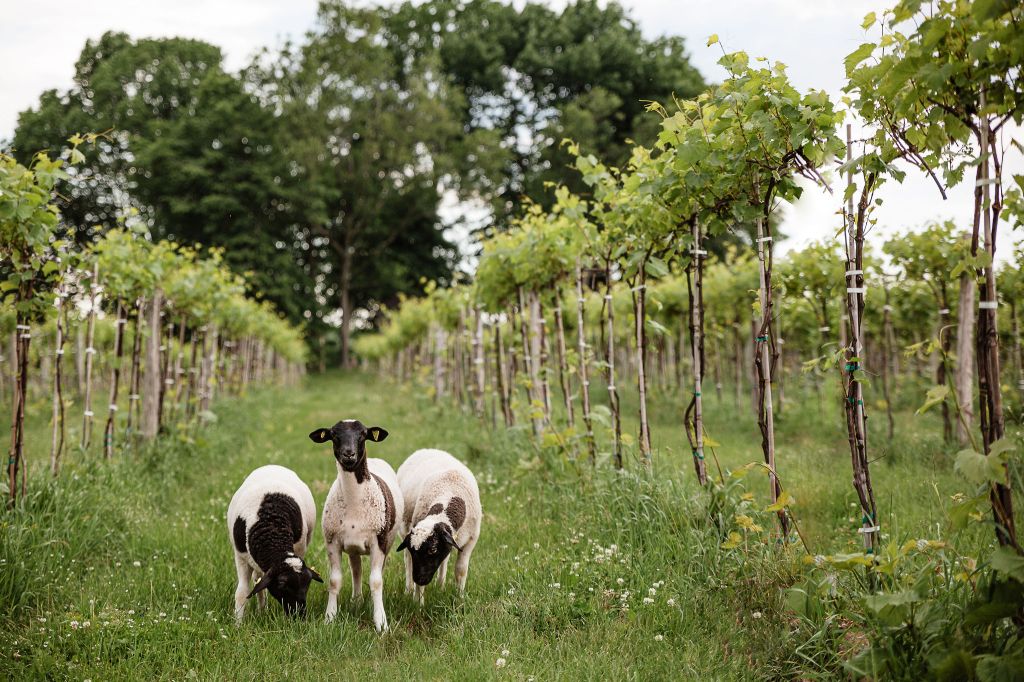
Vignoble La Bauge – A pioneer in Quebec wine, in the heart of the Eastern Townships, the Naud Family have been practicing viticulture for 30 years. Six years ago, they were certified organic, with the 2020 vintage their first fully organic harvest. According to Pascale, their wines are mostly hybrids and consistently amazing, reflecting perfectly the terroir and the family’s commitment to regenerative and responsible farming. In 2019, they welcomed sheep, llamas and ducks to the vineyard to help with fertilization, weeding, pest control and to help mow the cover crops between grape rows.
Simon Naud appears to be the ultimate collaborator. In 2019 he added Steve Beausejour to the winemaking team, a buzzy wine savant (read any article on Quebec wine and this guy’s name comes up – lol!!) who has helped modernize the La Bauge brand, convert the farm to regenerative agriculture and line-extend La Bauge with a fun and funky collection of hybrid blends called le beau juice.
Veronique Lemieux – a hugely accomplished winemaker who has run the City Roof Vineyards in the City program also works with Simon and Steve and has introduced her own hybrid line of La Bauge wines. Les Minettes is also working on a second cuvée collaboration with them – a blend of hybrids from the 2023 harvest that will “reflect the joyful personalities of Les Minettes!” You can visit Domaine La Bauge here.
Pigeon Hill – Another Eastern Townships certified organic producer, Pigeon Hill is located between Frelighsburg and Saint-Armand just north of the Vermont border. Manon Rousseau and Kevin Shufelt are owners of this delightful, mostly hybrid blends vineyard. 2023 will be the couple’s 16th year at Pigeon Hill, and the positive reviews for their delicious wines, just keep piling up!
The vineyard enjoys a beautiful southern exposure on well-drained alluvial soil, left by the melting glaciers and Laurentide Ice Shield. Using organic and permaculture methods, their vines express all the naturalness of the terroir and biodiversity. Visit them here https://vignoblepigeonhill.com/
Pinard & Filles – With an origin story that begins in 2011, Pinard & Filles is largely responsible for putting #vinduQuebec on the global wine map. They have secured a cult following and are one of the few Quebec wines available across Canada and in the US.
Over the years, Catherine Bélanger and her husband Frederic Simon, have figured out how to work with the seasonal variations and curve balls thrown by Mother Nature and in the process, created wines that elevate both the brand and region.
Their 5-hectare Pinard & Filles vineyard in Estrie borders lakes Memphremagog and St-Laurent. Their wines are 100% natural, farmed organically, fermented with native yeasts with no added sulphur. Their stunning, rare and hard-to-come-by wines are made from both hybrids and vinifera.
P&F bury their vinifera vines under hay and thermal blankets to ensure the vines survive the harsh Quebecois winter. The wine bar Pullman is owned by Catherine Bélanger, and Frédéric Simon, is in charge of the impressive, mostly natural wine list.
Clos Sainte-Thècle – founded in 2003, Whistler based winemakers Éric Blouin and Annie Trépanier, took over the 4.7-hectare vineyard north of Trois Rivieres in the community of the Mékinac MRC in 2019.
Eric got his start in wine, working as a sommelier at Barefoot Bistro in Whistler, a fine-dining restaurant with more than 15,000 bottles, considered the largest wine collection in western Canada. He and Annie started their own micro-production company, and for ten years, Éric travelled between Oregon and BC perfecting his winemaking skills, selling their Pinot Noir to a handful of restaurants and oenophiles.
They purchased @clossaintethecle in 2018. Their wines are all hybrids and deliciously fun and experimental. In five years, they’ve certified the vineyards organic, increased biodiversity, expanded the winery and are in the process of adding new vineyards to the property. You can find them here.
Domaine du Nival – another rock star winery, Matthieu Beauchemin and partner Fannie Boulanger are true artisans stewarding three hectares of vineyards and 100 apple trees in the valleys on the edge of the Yamaska River, north of Saint-Hyacinthe. They mainly grow vinifera grapes, including Pinot Noir, Gamaret, Vidal and Albariño, employing regenerative and permaculture methods on their small, 100% organic vineyards.
Their winemaking philosophy is rooted in respect for nature, and they have adopted a minimalist approach in the cellar. “Yeasts and native bacteria still accomplish much more than we do and we do not fine or filter wines and ciders.”
The Les Minettes sisters describe DdN wines as beautifully precise, of very high quality, reflecting the terroir as only natural winemaking can. There is enormous demand for their wines and ciders and you will see/experience out-of-stock disappointment everywhere. So why not connect with Les Minettes and let them order for you? See the fruits of their labours here.
Domaine l’Espiégle – Located in Dunham in the heart of the Western Townships, Domaine l’Espiégle is another natural QC wine in high, high demand! Rooted in the belief that “good grapes make good wine”, the vineyards have been planted on prized fruit growing land for over a century. The vineyard is planted to European varieties – mostly, pinot noir, chardonnay and pinot meunier.
A regenerative philosophy and carbon awareness permeates all field and cellar practices. According to Pascale at Les Minettes, winemaker Zaché Hall learned the craft of winemaking in France. “He is extremely meticulous and patient, and this is reflected in the excellent quality of his wines.”
In an interview with La Presse, Zaché says he’s a firm believer in Quebec terroir. “I was surprised to see to what extent the beauty of our territory could be transmitted in our wines. The beauty of our landscapes, the life and minerality of our soils, our seasons and our biodiversity are all present.” Visit them here.
Vignoble Les Pervenches – Mike Marler and Véronique Hupin are among the courageous, early pioneers in Quebec viticulture. The couple purchased the 4 hectare Les Pervenches vineyard in Farnham, Eastern townships in 1998, inheriting Chardonnay vines planted in 1991.
They farm the property following organic and biodynamic (Demeter certified) methods and produce European vinifera wines with some Seyval. Their wines are amongst the most celebrated in the region, regularly appearing on QC restaurant and wine bar lists. You can find them here https://lespervenches.com/

Maison Agricole Joy Hill – If there was an award for label art and brand design, Justine Thérien and Julien Niquet founders of Maison Agricole Joy Hill would nab it. In a heartbeat. IMHO. I have not had the opportunity to try the wines but the presentation is indeed joyful….and who doesn’t need more of that in their lives! (Art by local artist Josianne Lanthier.)
This is a 100% vitis vinifera vineyard where they grow Blaufränkisch, Gamay, Grüner Veltliner, Gamay, Melon de Bourgogne, Chardonnay and more. No hybrids for these risk-takers. The property was bought in 2017 and the couple planted 37,000 vines. The owners cultivate their vines organically and are in the process of converting to biodynamic viticulture. Their south-facing exposure, multiple hill sides, granite stony soils and southern Quebec/northern Vermont location provides ‘optimal’ growing conditions for European varieties (not including the frost, hail and torrential rains in September 2022).
Joy Hill 2022 cuvees are in short supply – as in sold out everywhere – however, many are available on wine lists of Quebec restaurants and wine bars, and of course at Les Minettes.
Restaurants and wine bars in Quebec featuring Quebec wines:
- Candide (Montréal)
- Bar Vin Vin Vin (Montréal)
- Vin Mon Lapin (Montréal)
- Foxy (Montréal)
- Pullman (Montreal)
- Toqué! (Montreal)
- Buvette Scott (Québec City)
- jjacques (Québec City)
- Faux bergers (Baie-Saint-Paul)
- Cote est (Kamouraska)
- 40 Arpents (St-Onesime)
- Parcelles (Austin)
- Passe-Montagne (Frelishburg)
- Soif (Gatineau)
Restaurants & Retail in Ontario
- Buvette Daphnée (Ottawa)
- Paris Paris (Toronto)
- Grape Witches (Toronto)
FEATURE IMAGE: VIGNOBLE STE PÉTRONILLE WINERY AND CIDERY – ILE D’ORLEANS

 A Must Read Blog